
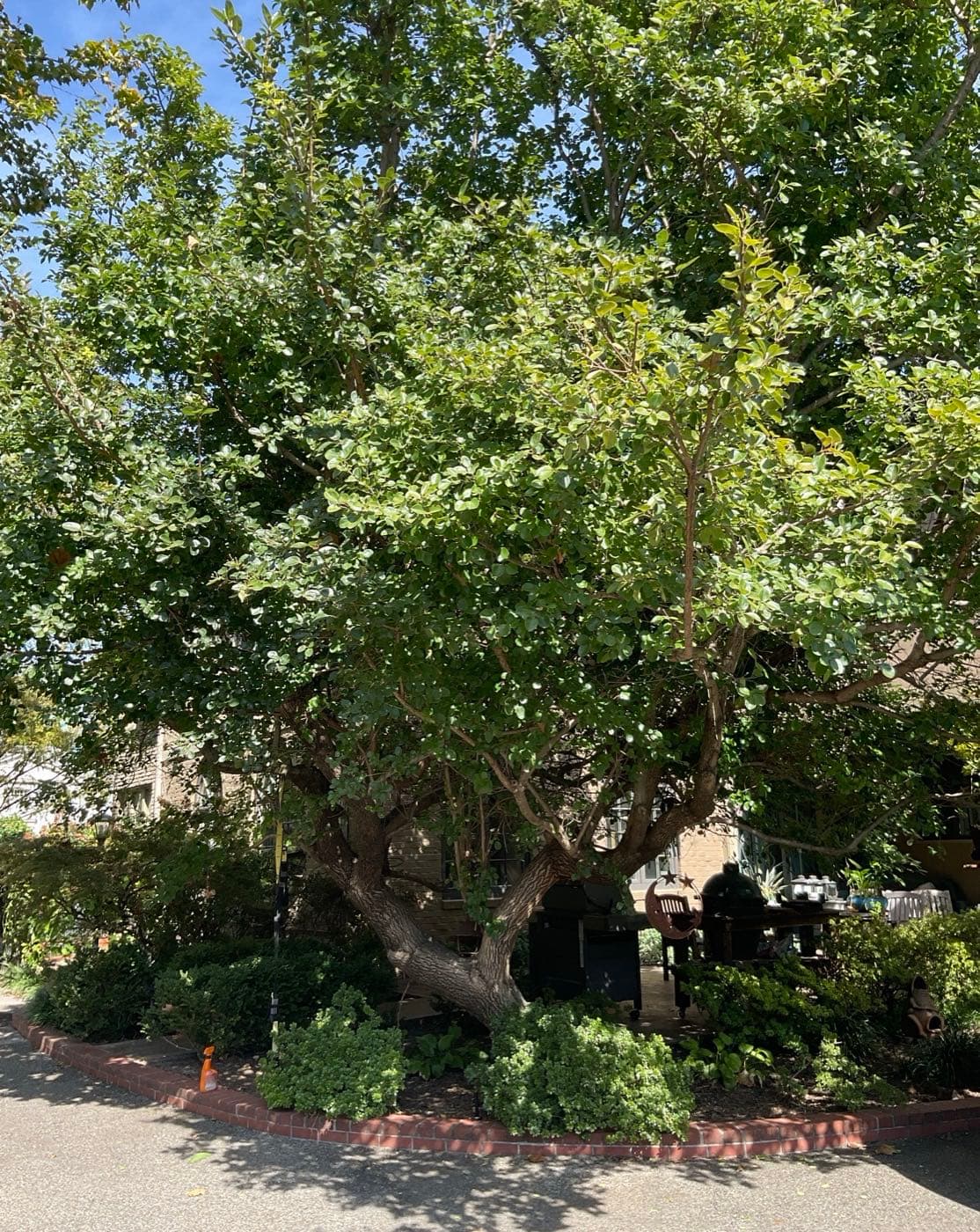
Tree spotlight: the Chinese fringe tree
Robinson Tree Service · Memphis, TN
First in a series on trees worth planting in Memphis. This one flowers like nothing else in your street, fits under a power line, and has exactly one real weakness.
We are starting a series on individual trees — one at a time, written for somebody standing in a nursery trying to decide. Not a catalogue entry. What it actually does in a Memphis yard, and what nobody tells you until it is in the ground.
First one: the Chinese fringe tree. If you have ever slowed down for a small tree covered in what looks like white lace, some time in May, and then found you could not name it, this was probably it.
- Botanical name
- Chionanthus retusus
- Family
- Oleaceae — the olive family, same as ash and lilac
- Mature size
- Usually 10–20 ft tall and about as wide. Up to 30–40 ft in ideal conditions, which is rare in a yard.
- Growth rate
- Medium
- Hardiness
- Zones 5a–9b. Memphis is 8a, comfortably inside it.
- Light
- Full sun or part shade. Flowers heaviest in full sun; foliage looks best in dappled shade.
- Soil
- Adaptable — clay or loam, slightly acid, as long as it drains.
- Water
- Does NOT tolerate drought. This is the catch; see below.
- Flowers
- Snow-white, fringed, fragrant, in 4-inch panicles at the ends of the shoots. Spring.
- Fall color
- Gold
- Bark
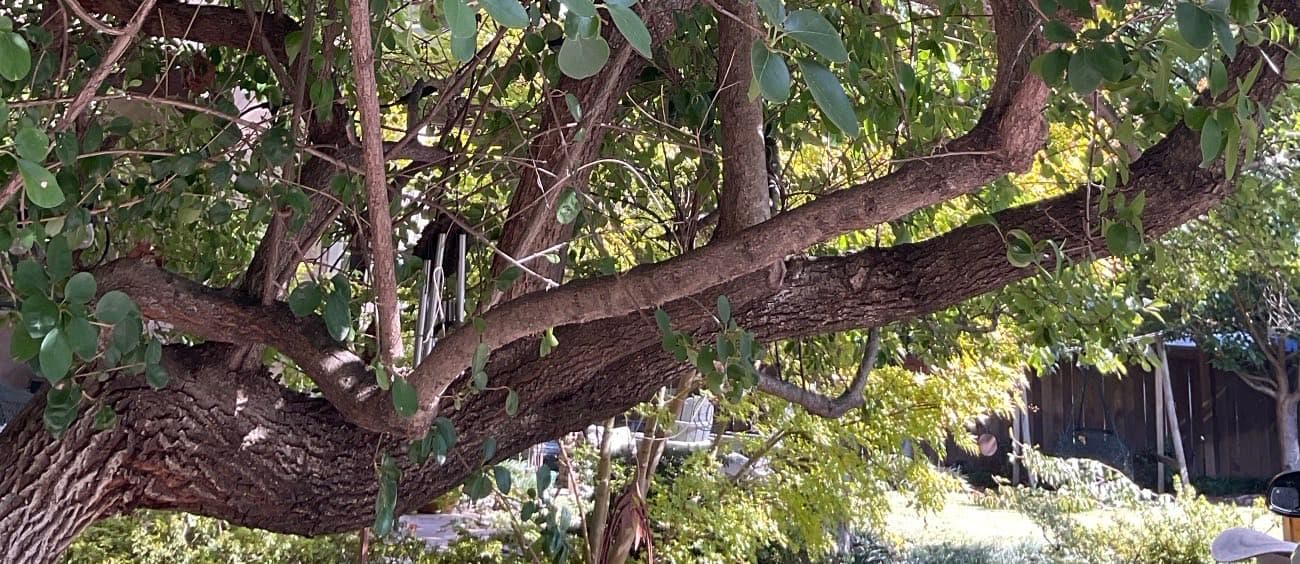
- Dark brown to gray, exfoliating, ridged. A genuine winter feature.
- Under a power line?
- Yes — one of the few small trees that earns the spot.
- Main drawback
- Deer. They will find it.
What it does through the year
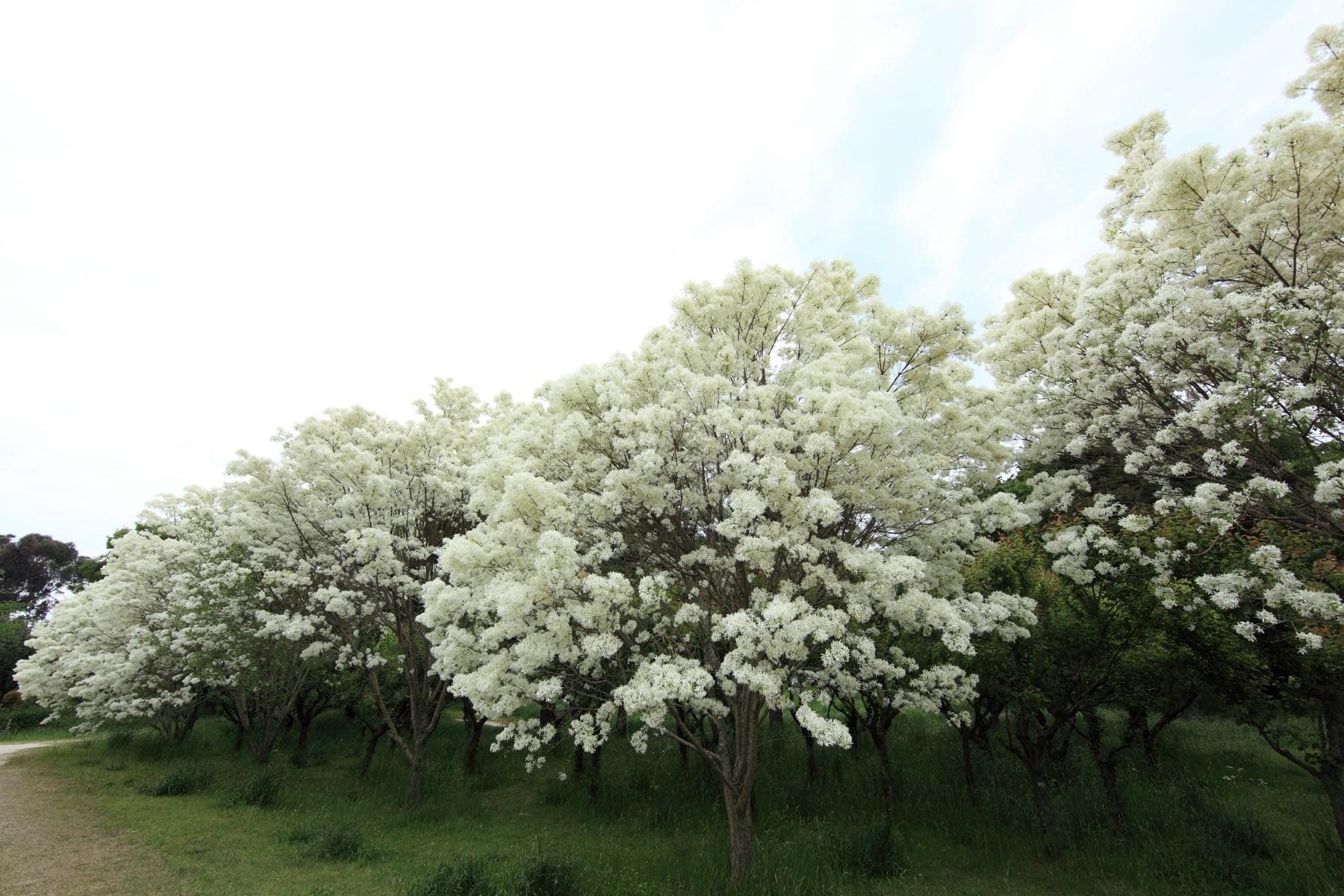
Spring is the reason anyone plants it. The flowers come in loose panicles at the ends of the shoots, pure white and finely cut, so a tree in full bloom looks like it has been draped in something rather than flowered. They are fragrant, which a lot of showy spring trees are not. One honest caveat: it tends to flower hard in alternate years, so a quiet spring is not a sign anything is wrong.
Through summer it is unremarkable in a useful way — clean, leathery, glossy leaves, no mess, nothing dropping on the car. Fall turns it gold. And then the leaves come off and you get the part most people never mention, which is the bark: dark, ridged and peeling, properly interesting at eye level in January when there is nothing else to look at.
Where it goes in a Memphis yard
Ten to twenty feet, and about as wide. That puts it firmly in the small-tree class, which means it will sit ten to fifteen feet off the house without anybody worrying, and — the useful part — it can go under an overhead line without ever needing to be cut out of one.
That is a shorter list than people expect. Most of what gets planted under Memphis power lines is either too big for the spot or is a Bradford pear, and we have written separately about what to put in a gap after a removal and why the size question comes before the species question.
Give it sun if you want the flowers. It will take part shade and look perfectly healthy there; it just will not put on the show.
The one thing it will not forgive
Drought. NC State lists it plainly as intolerant of dry soils and drought, and that is the single reason a fringe tree fails here rather than anywhere else.
Memphis had 0.64 inches of rain in September 2026 — about a fifth of normal, in the hottest September on record. A young fringe tree through a summer like that, unwatered, is a dead fringe tree. This is not a plant-it-and-walk-away tree for its first two or three years. After that its roots are deep enough to cope with an ordinary Memphis August, but it is never going to be the thing you plant because you want something tough.
If that sounds like more than you want to commit to, say so before you buy one. There are small trees that will shrug off a dry summer. This is not quite one of them, and it is better to know that in the nursery than in August.
Male or female, and why you might care
Fringe trees are functionally male or female — the flowers carry both parts but behave as one sex. The male plants have the showier bloom, noticeably so. The female plants flower a little less dramatically and then carry clusters of dark blue fruit through late summer, which the birds strip.
Nurseries very often cannot tell you which you are buying, because they are usually grown from seed and will not show you until they flower. If the display is what you are after, buy one in bloom.
Its native cousin, and the ash borer
Worth knowing, because it comes up and the answer is more reassuring than the headline. There is a native American fringe tree — Chionanthus virginicus, the white fringetree — and in 2014 a researcher at Wright State found emerald ash borer larvae completing their development inside one. That was the first confirmed non-ash host in North America. It makes sense: fringe trees and ash are both in the olive family.
Two things to hold on to. First, that work was on the native white fringetree, not on this one — the Chinese fringe tree is not established as a host. Second, follow-up monitoring found the damage much lighter than feared, with attacked trees that were not re-infested recovering. It is a thing to be aware of, not a reason to plant something else.
If you want one
- Buy it in flower if the bloom matters to you — that is the only reliable way to get a male.
- Full sun, and somewhere it will not bake dry. Not the strip between the drive and the fence.
- Water it properly through its first two summers. Deeply and not often, out at the edge of the branches, not against the trunk.
- Plan for deer if you are anywhere they browse. A young one is exactly the size they like.
- 'Tokyo Tower' is the narrow upright form if you are short of width. 'Serrulatus' stays more of a large shrub.
- Mulch it, two to three inches, out as wide as you can, and keep it off the trunk.
If you are working out what a particular spot in your yard can carry — overhead lines, how far from the house, what the old root system left behind — that is a free visit. We would rather tell you the spot is wrong before you buy the tree.
Where these numbers come from
- NC State Extension — Chionanthus retusus, Chinese fringetree (size, zones, soil, drought intolerance, sexes, bark)
- University of Connecticut plant database — Chionanthus retusus
- NC State Extension — Chionanthus virginicus, the native white fringetree
- Cipollini, D. — White Fringetree as a Novel Larval Host for Emerald Ash Borer (Wright State University)
- USDA Plant Hardiness Zone Map — check your own ZIP code
- Photograph at the top of this page: Chionanthus retusus by Tanaka Juuyoh, used under CC BY 2.0
If this is your situation
Questions about a tree on your property? 901-363-3539, or send us a note. Estimates and preventative check-ups are free.
More from us
Or email us for a free preventative check-up for your trees.
Fill out the form and tell us what kind of tree service is needed: from tree removal, trimming, to firewood or just a health check. We have a certified arborist and professional crews who know the trees of Memphis.