
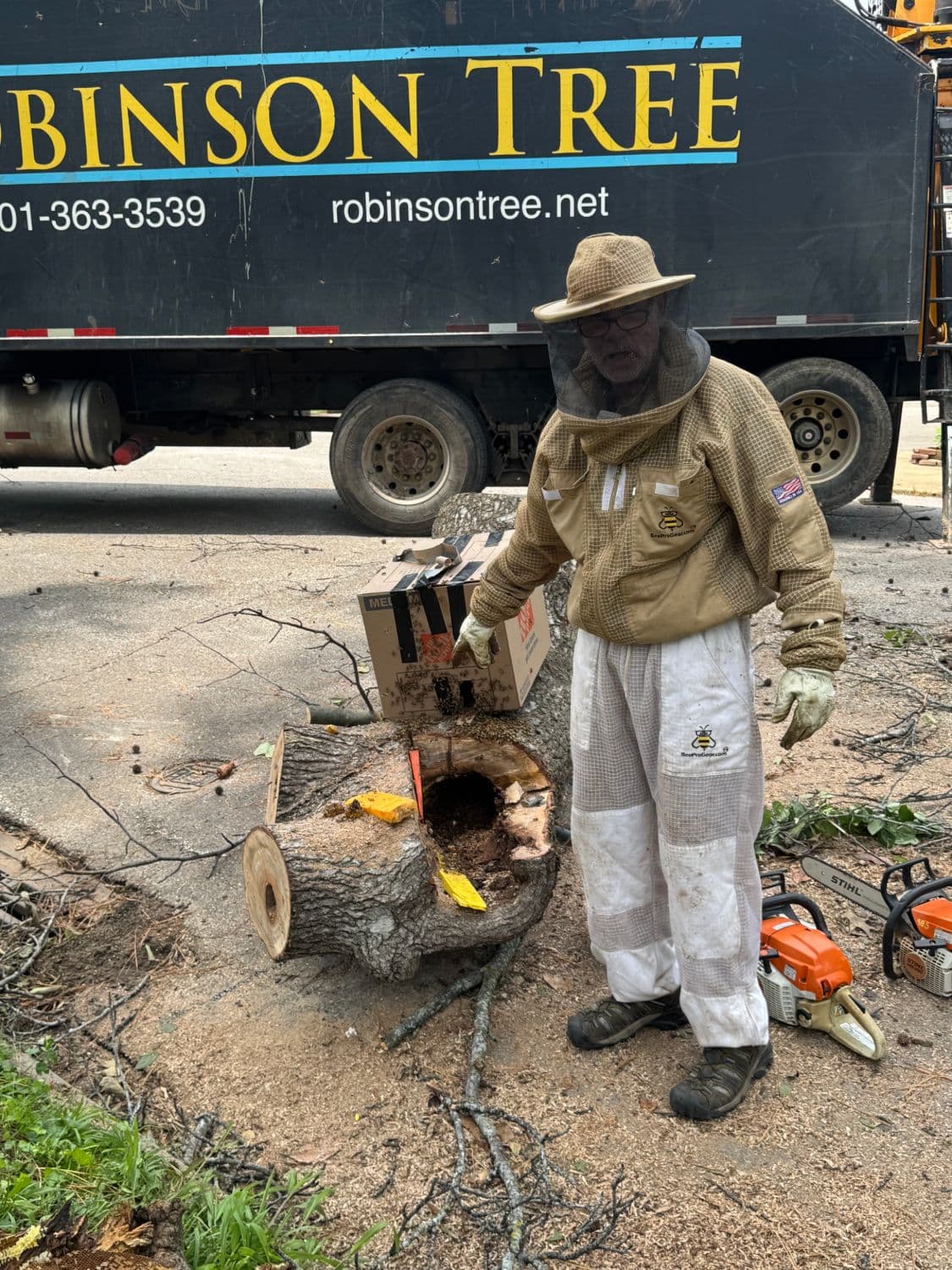
There were honeybees in the tree. Here is what we did.
Robinson Tree Service · Memphis, TN
Most companies spray the colony and keep cutting. We have a beekeeper on the crew, so the bees come out alive and go somewhere they can keep working.
Every so often a tree comes down and there is something living in it. Usually squirrels, sometimes an owl, and now and then the thing nobody expects — a wild honeybee colony that has been quietly working out of a hollow in the trunk for years, with nobody in the house any the wiser.
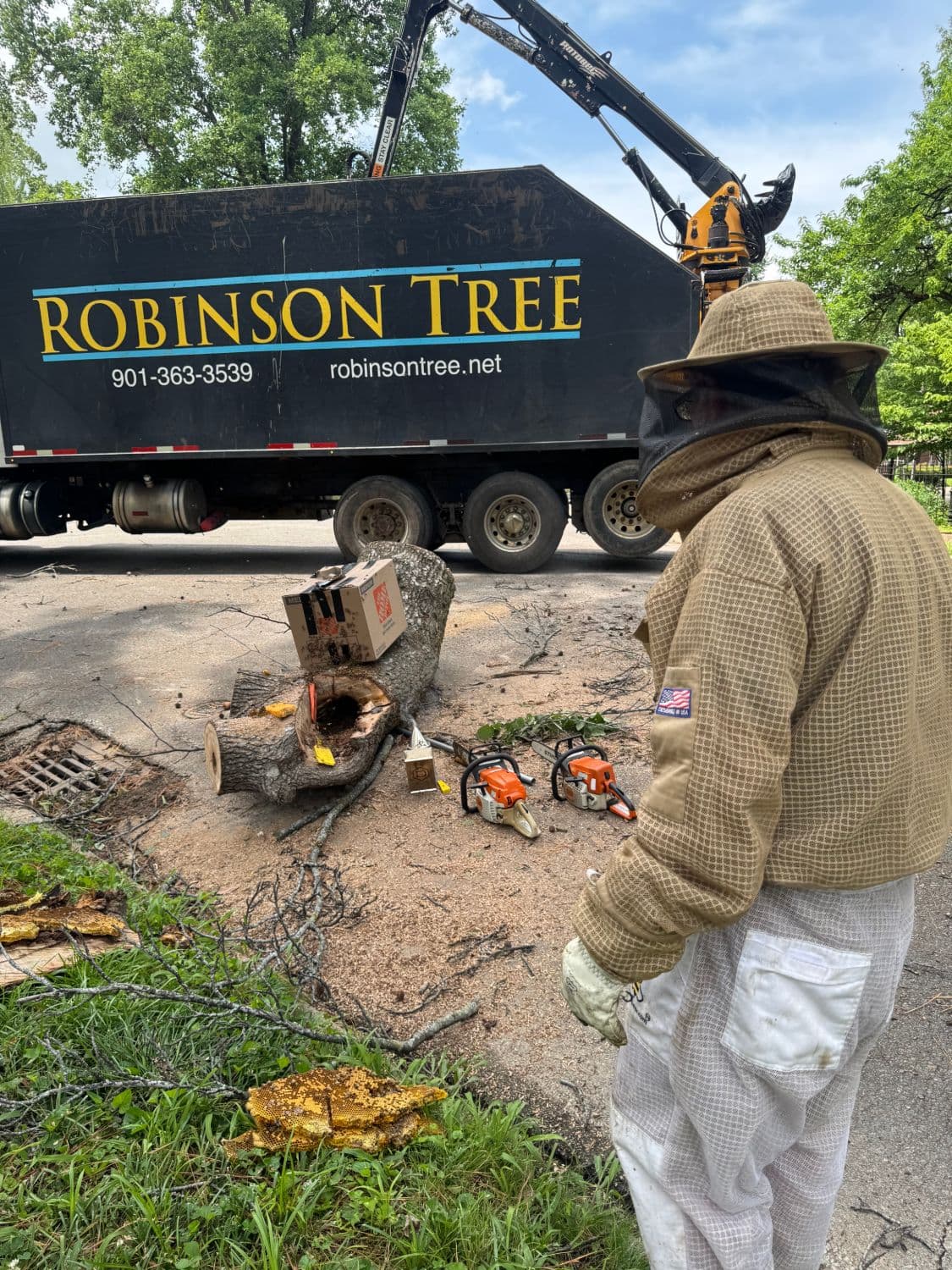
That is a decision point, and a lot of the industry decides it the fast way. Spray the cavity, wait, keep cutting. We do not. We have our own beekeeper on the crew, in the suit, on the job, which means a colony we find on a Memphis removal gets boxed up and moved rather than killed.
Why it matters more than it sounds
A colony inside a tree is not a swarm passing through. It is an established hive with comb, stored honey, and brood — the next generation of bees sealed in the cells. The one we opened here had built sheet after sheet of it down the inside of the trunk.
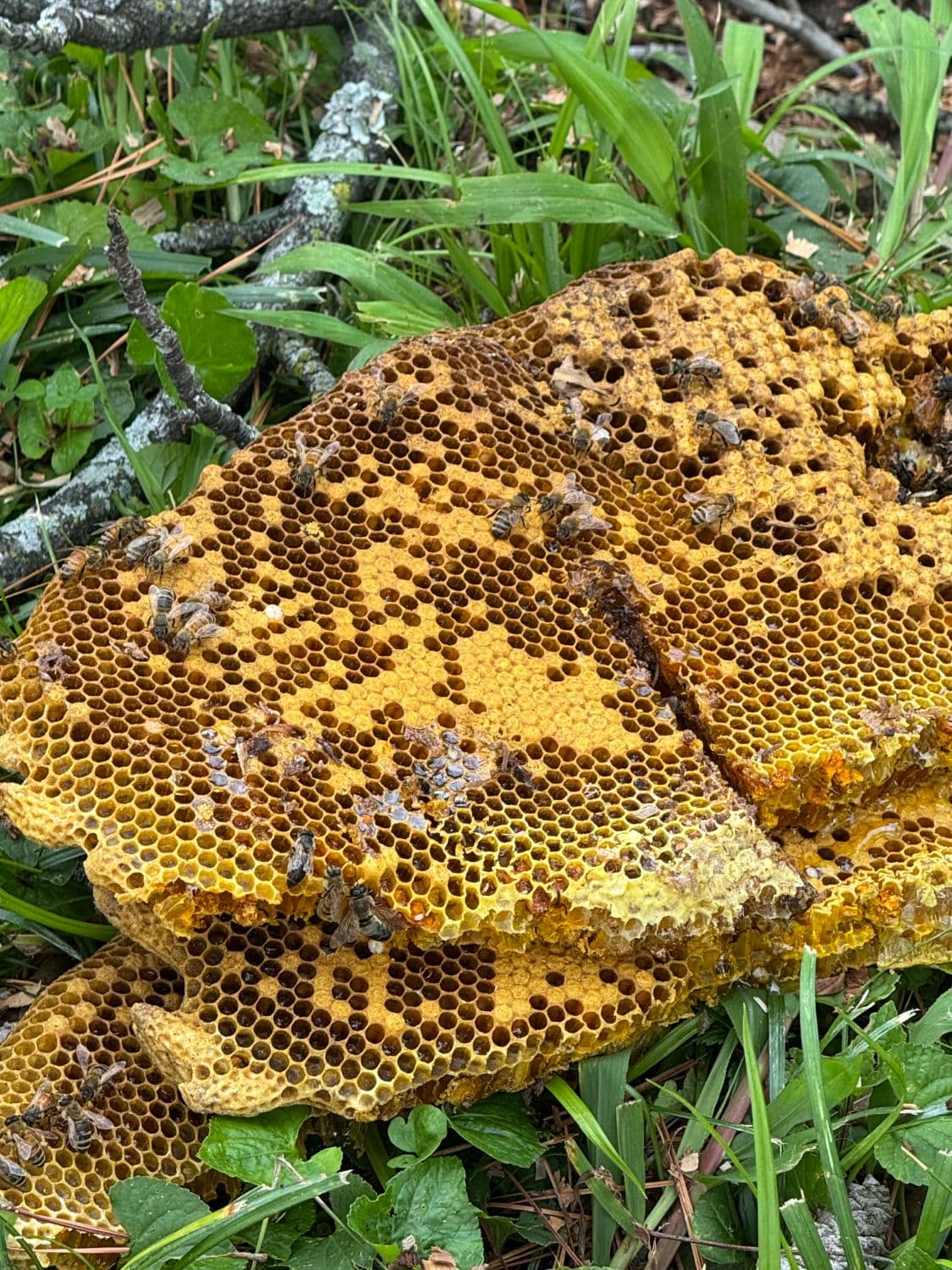
Feral colonies like this one matter out of proportion to their size. They are survivors — they have made it through Memphis summers, Memphis winters and the mites that have wrecked managed hives across the country, without anyone treating or feeding them. That is worth saving on its own terms, quite apart from the pollinating they do for every garden within a couple of miles of the tree.
How the cut is actually done
The work is slower than a normal removal and that is the whole trick. Rushing a hive is how you end up with a dead colony and a crew getting stung.
- Find the cavity first. The entrance is usually a knot hole or an old pruning wound with steady traffic in and out of it — easy to spot once you know to look, easy to miss from the ground.
- Work the tree down to the section holding the hive, and leave that section whole. Everything above and below comes off normally.
- Set the hive section down gently and open it at the cut end rather than splitting it lengthwise, so the comb inside stays in sheets instead of collapsing.
- Cut the comb out by hand. Brood comb is kept and goes with the bees; honey comb comes out too, since leaving it invites robbing and ants.
- Find the queen, or get her in with the rest. If the queen goes into the box, the colony follows. If she does not, nothing else you do matters.
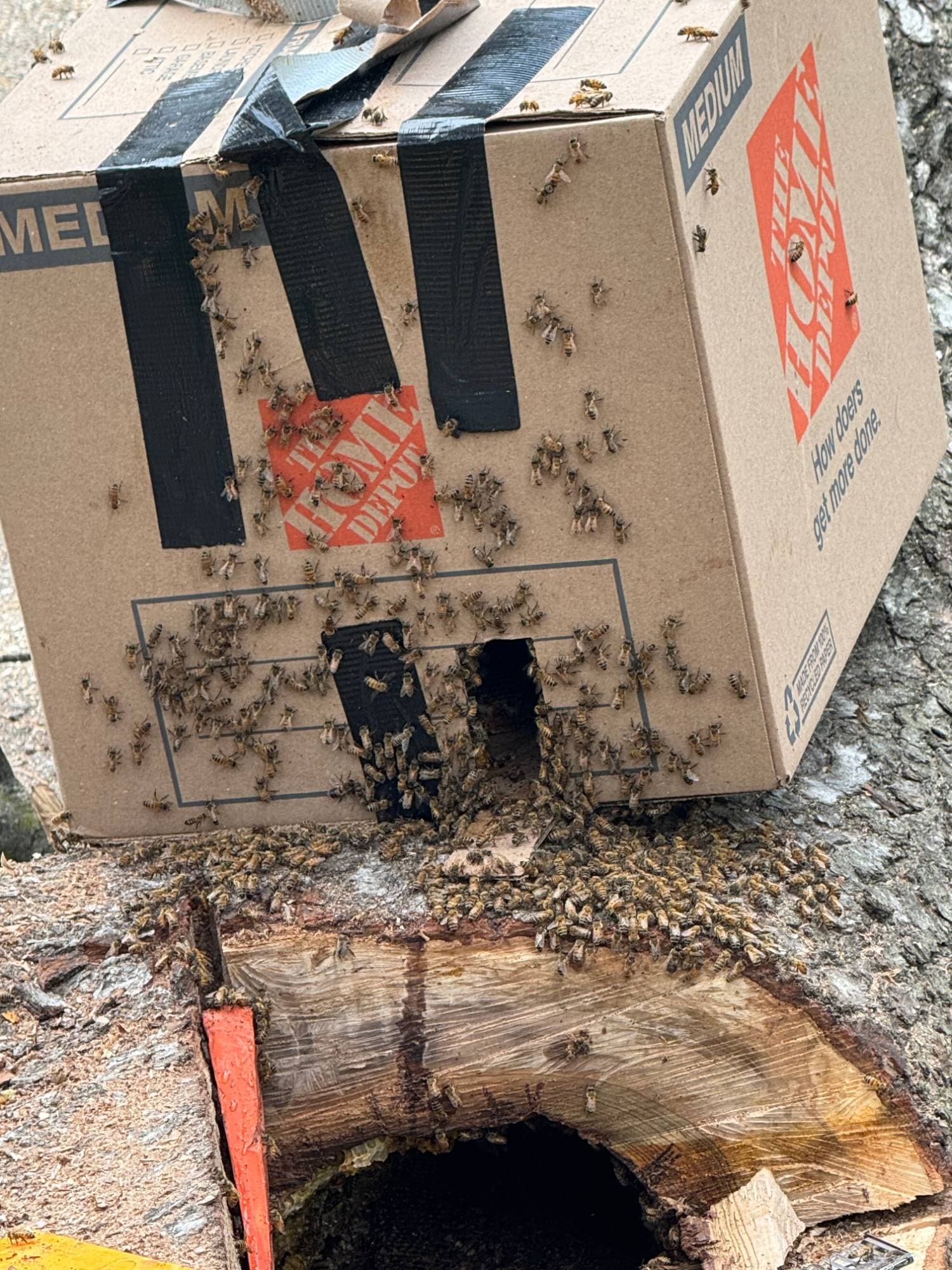
That last photograph is the part worth understanding. Once the queen is in the box, the bees do the hard work themselves. The fanning at the entrance is them broadcasting her scent, and the stragglers walk in on their own. It is why the box stays on site a while rather than leaving the moment the comb is out — the foragers that were a mile away when the tree came down need somewhere to come back to.
If you know there are bees in the tree, say so when you call. Not on the morning of the job — when you book it. It changes the crew, the gear and the time we allow, and a colony we are expecting has a far better chance than one we meet with a saw already running.
Honeybees, not everything that stings
Worth being straight about this: not every insect in a tree is a honeybee, and not everything gets relocated. Yellowjackets nesting in a stump, hornets in a limb and carpenter bees in a dead branch are all common in Memphis and none of them are honeybees. We handle those as the hazard they are to the crew.
The quick tell is the traffic. Honeybees run a steady two-way stream in and out of one hole, all day, with bees landing heavy and often carrying visible lumps of pollen on their back legs. Yellowjackets come and go from a hole in the ground or a rotten cavity with a faster, more erratic flight and nothing on their legs. If you are not sure, you do not have to be — tell us what you have seen and we will look.
What not to do before we get there
- Do not spray the entrance. It kills the colony, it does not empty the cavity, and it leaves poisoned honey in a tree we still have to cut.
- Do not plug the hole. Bees that cannot get out of the front will find another way, and that is sometimes through a soffit and into the house.
- Do not knock on the trunk to see what happens. It works.
- Do keep children and pets off that part of the yard until the job, and keep mowers away from the base of the tree.
A removal with a hive in it is a longer day and we will tell you so when we quote it. What you get for it is a tree gone, a colony still alive somewhere else, and nothing poisoned in your yard. That seems like the right trade to us.
If this is your situation
Questions about a tree on your property? 901-363-3539, or send us a note. Estimates and preventative check-ups are free.
More from us
Or email us for a free preventative check-up for your trees.
Fill out the form and tell us what kind of tree service is needed: from tree removal, trimming, to firewood or just a health check. We have a certified arborist and professional crews who know the trees of Memphis.